3 Top Tips: Adolescent Dog Training
Updated: Jul 19, 2025

Many dog owners will know the struggle of owning an adolescent dog, it can be tough. From hormones, to new found confidence and everything in between. Navigating adolescence can be hard for the dog and for their owners, but the good news is: There's a way through!
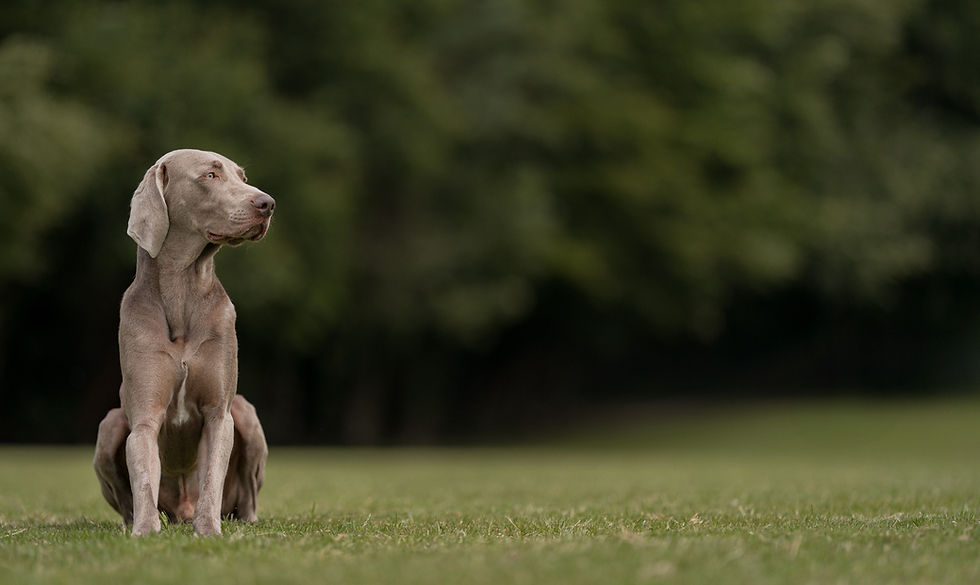
I currently have a young male Weimaraner, who I adopted at 6 months old, here’s how I’m building engagement with my adolescent male dog.
3 things I’m doing to help maintain good engagement levels are:
1 - Practising his favourite/most well known behaviours first when in a new place. If your dog doesn’t know “lie down” too well, don’t ask for it immediately when in a new place! I know that “close” is this dog’s most practised behaviour, so it’s the first one I ask for! By doing this, you'll ensure they are successful, in turn building their confidence, ready to ask for harder behaviours in the future. If your dog fails too many times or finds the training too hard they can feel disheartened, underconfident and less likely to try again next time.

2 - Rewarding with what is valuable to him. If he wants the toy as a reward, I use it. If he wants a food reward, I use it. I make sure I am using what my dog thinks is valuable, not what I think he should value! Many dog owners think that cheese is the highest value reward, or maybe sausage. The truth is that dogs, like humans, have different preferences and find value in different places. Listen to your dog, use rewards that they value and you're more likely to be successful.
3 - Keeping sessions short in new places. Adolescence is hard on the brain, I don’t need to ask for hours of training on top of that! Keeping sessions short = keeping sessions successful and fun. Perhaps try a short training session followed by play or by a fun walk, allowing your dog to decompress afterwards and showing them that you're fun too!


Comments