Help! Why is my dog so stubborn?
We hear this a lot amongst dog owners:
"Why is my dog so stubborn?"
"He only listens when he wants to"
"He's so stubborn"
"It's all on her terms"
So why are so many dog owners finding that their dogs are so stubborn? Let's look into it in a little more detail...
Personally, I hate the word 'stubborn' because it feels reductive and doesn't account for the whole range of explanations for the statements above. When training or living with a 'stubborn' dog, the most important first step is being aware of their genetics and breed history. This will tell you so much about the character of the dog before you've even gotten to know them. We have spent thousands of years selectively breeding dogs, using artificial selection to make them perfectly suited for certain jobs and roles that benefit us, whether its herding, retrieving, guarding or any of the other jobs we ask of our canine companions. This breeding makes most breeds of dogs very resilient - a vital skill for a working animal, resilience and love of the job. So, when they show us that resilience and it doesn't fit our current needs, let's take a moment to appreciate their genetics instead of labelling them as 'stubborn'.

The Spaniel
Spaniels are gundogs, they were bred to work through thick brush, retrieving, flushing and ignoring brambles or anything that may slow them down. They're bred to work long days through any weather, showing huge drive and resilience.
When your Spaniel won't stop sniffing or ignores your recall - remember that their genetics are pushing them to keep going.
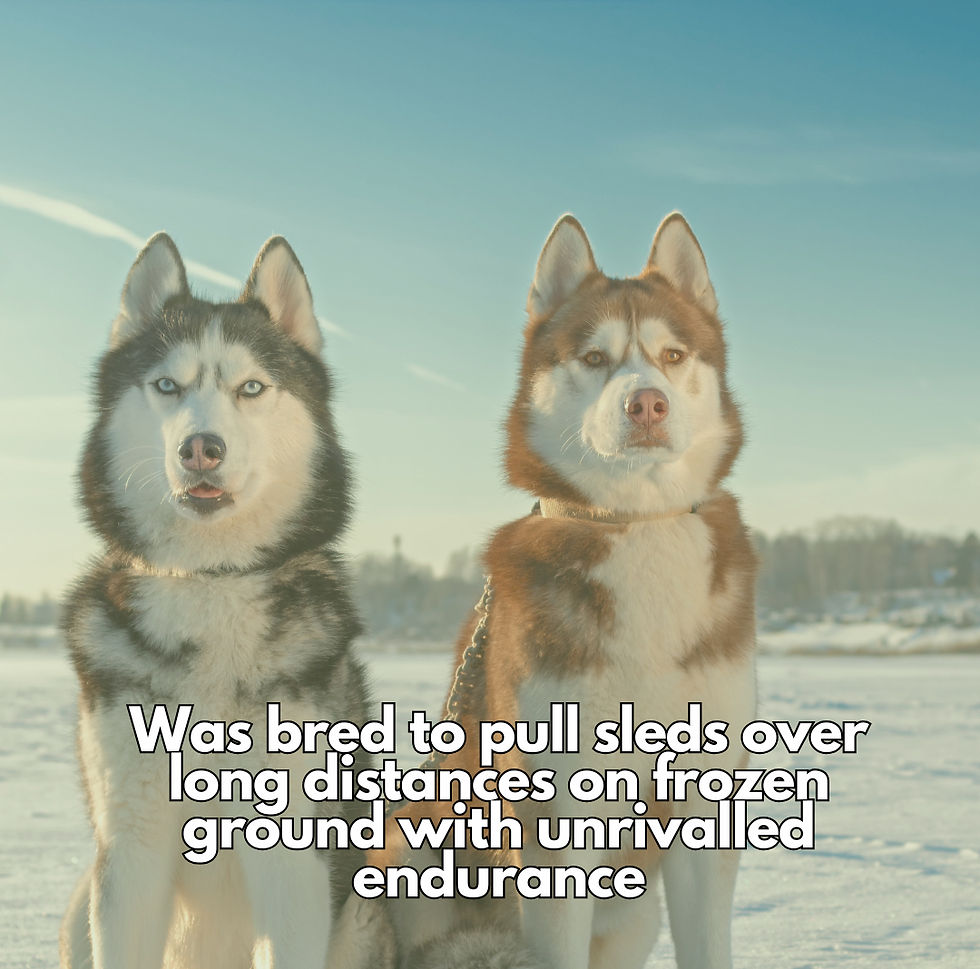
Huskies & Malamutes
This applies to all sled breeds but Huskies are a dog that are commonly labelled as 'stubborn' and 'hard to train' when in reality, they're perfectly equipped to do their intended jobs.
The dogs were bred to pull sleds over long distances on frozen ground, showing determination, resilience and stamina.
Is it any wonder, then, that many people have a hard time training them to loose lead walk?

The Collie
The Collie is the most intelligent breed of dog and one of the most resilient too!
If you've ever seen a Collie working sheep or cattle, you'll know just how determined they can be.
When challenged by cattle, these dogs are bred to show fierce bravery and continue working them, stopping at nothing to keep their herd safe and in line.
So, when they won't stop chasing the vacuum, their genetics are likely kicking in!

The Dachshund
Perhaps the breed most infamous for being 'stubborn'. This fierce little dog has a name that literally translates to 'badger dog' from their origins in badger hunting.
Most people know that badgers aren't known for being easy prey so Dachshunds had to show a huge amount of bravery and resilience when hunting them, ignoring injuries and carrying on.
These dogs are hnter first and foremost but when living as pets, their resilience often gets them in trouble!

The Bulldog
Bulldogs were originally bred for bull-baiting, a sport that is now (fortunately) outlawed. the job of bulldogs was to anger and stress the bulls, jumping and antagonising them.
Given the size difference between a bulldog and a bull, it isn't hard to see how much bravery and resilience was required of them. After all, you have to be pretty stubborn to keep going for the bull while it's kicking at you.
In addition to genetics, other factors that may affect your dog's 'stubborn' behaviour are:
Fear
Over-arousal
Lack of understanding
Lack of motivation
Illness, pain or discomfort
Fatigue
If you're struggling with your dog's behaviour it is always best to contact a trainer or behaviourist who can help you to understand your dog and get to the bottom of their behaviour.
If you need help, click here to Contact and we can help you to get the best from your dog's genetics!


I read this article carefully and found many interesting points. The information is presented clearly without unnecessary jargon. I made note of several points that will be useful to me later. It is an article that manages to be both complete and accessible.